
Going to Paris on Holiday: Plan for a Fun, Low-Stress Trip.
3/20/19267 min read


If you're a first-timer or one of many Paris lovers, you'll be happy to know Paris works in any season. Still, spring and fall often feel easiest because the weather stays mild and crowds can be lighter. In this guide, you'll learn when to go, where to stay, how to get around, what to book early, and how to build an itinerary that feels exciting, not exhausting.
Pick the right time to visit Paris so the city feels magical, not packed
Paris changes a lot by season. That matters because crowds, daylight, and weather shape everything, from how long you want to walk to how early you'll line up for a museum. Your best move is to match the season to your travel style and budget, not to some "perfect" month.
Early mornings are your secret weapon. If you start sightseeing before late morning, the Seine feels calmer, photos look cleaner, and popular areas don't feel like a parade route. You'll notice it fast near the Eiffel Tower, the Louvre area, and big bridges.
Spring and fall for easy weather and a classic Paris feel
Spring and fall are made for long walks and unhurried café stops. You can comfortably stroll between neighborhoods, then pause for a pastry without feeling sticky from heat or stiff from cold.
Pack for layers. Bring a light jacket, a compact umbrella, and shoes you can walk in for hours. With that setup, you can bounce from museum time to park time without needing to "go back and reset" midday. These seasons also make it easier to enjoy the small stuff, like sitting outside with a coffee and watching the city move.
Peak perfection: May, June, September
Romantic/visual appeal: April, October, December
Avoid if possible: January, February, November
The best time to visit Paris, considering the weather and crowds.
Summer and winter, how to plan around peak crowds or shorter days
Summer brings big energy and big crowds. Start early, then plan a slower midday block. Museums are perfect for that, especially when the weather turns hot or storms pop up. Later, head back out when the light gets golden. In summer, you'll also catch pop-up hangouts along the Seine that feel casual and local.
Winter feels quieter and more indoor-friendly. Shorter days push you toward museums, warm cafés, and long bakery stops. Plan your "must-see" sights for the brightest part of the day, then keep evenings simple with a cozy dinner near your hotel.
The best time for budget travellers to visit Paris.
Best value overall: March, October
Rock-bottom prices: January, November
Avoid on a budget: May, June, September
Choose where to stay by neighborhood, not just by price
Paris is split into 20 arrondissements (districts), and your location shapes your whole holiday. The lower numbers are generally central, and the higher ones are peripheral. These arrondissements are normally referred to by their number only, not their names.
A cheaper, far-out room can cost you time and energy every day. On the other hand, "central" isn't one tiny zone; it's more like a cluster of well-connected areas where you can walk or take a short Metro ride to most sights.
A simple method works well: list your top activities (museums, shopping, food, nightlife, day trips), then pick a home base within an easy Metro ride or a comfortable walk.
We strongly recommend using Trivago as a hotel price-comparison site. They filter your requirements on budget, location, facilities, ratings, and dates. See their massive range for Paris here.
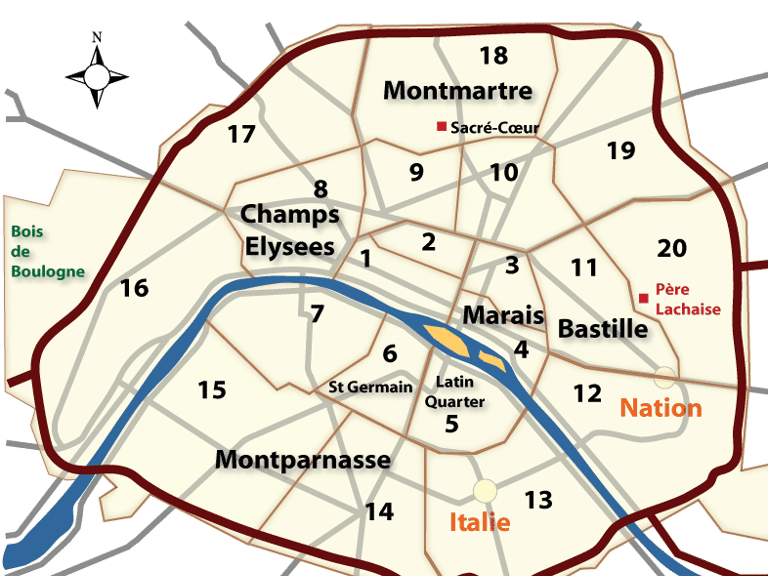
Le Marais (3rd & 4th), Saint-Germain (6th), Montmartre (18th), and central Paris, which one fits your vibe
Each area has its own personality, and choosing the right one makes your days run more smoothly.
Le Marais: Great for shopping and food, plus easy wandering; the tradeoff is higher prices and busy weekends.
Saint-Germain-des-Prés: Classic cafés and pretty strolls; the tradeoff is you'll pay for the Left Bank charm.
Montmartre: Hilltop views and storybook streets; the tradeoff is stairs and some tourist-heavy corners.
Central Paris (around the most connected areas): Close-to-everything convenience; the tradeoff is noise and a bigger hit to your budget.
Simple booking tips that save money and help you sleep better
Before you book, focus on comfort, not just a star rating. A few checks prevent the most common Paris hotel surprises:
Choose a place near a Metro station, so you don't end each day with a long walk.
Confirm air conditioning in warm months (it's not a given).
Check elevator details, especially in older buildings with 3 or more floors, which may not have one.
Expect smaller rooms, then decide what you can live with.
Stay safety-minded, too. Pick well-lit streets, read recent reviews, and confirm check-in times if you arrive early, so you don't get tired of dragging bags around.
Build a Paris plan you can actually enjoy, with a few big wins each day
Paris looks small on a map, but it's dense. If you try to cross the city five times a day, you'll burn time and patience. Instead, choose one to two neighborhoods per day, pick one "anchor" sight, then add food and a nearby relaxed walk.
Timed-entry tickets are your best friend for top museums and popular spots. Book them early when you can. Also, don't stack too many timed reservations in one day. You'll feel rushed the moment the Metro runs late or lunch takes longer than planned.
Your can't-miss list for first-timers, and how to see it without rushing
You don't need to see everything. You need to see what you'll remember.
Aim for these highlights, but keep your pace realistic:
Eiffel Tower: Go at sunrise for calm, or sunset for the glow.
The Louvre: Do a focused visit, pick a few wings, and leave satisfied.
Musée d'Orsay: Great art in a beautiful building, and it's easier to digest.
Montmartre and Sacré-Cœur: Choose steps for the vibe, or a ticketed climb for bigger views.
Notre-Dame area: Even with changes over time, the historic center feels strong.
Centre Pompidou: Modern art, plus roof views that surprise people.
Decide your priorities before you arrive. Otherwise, you'll waste prime hours debating in lines.
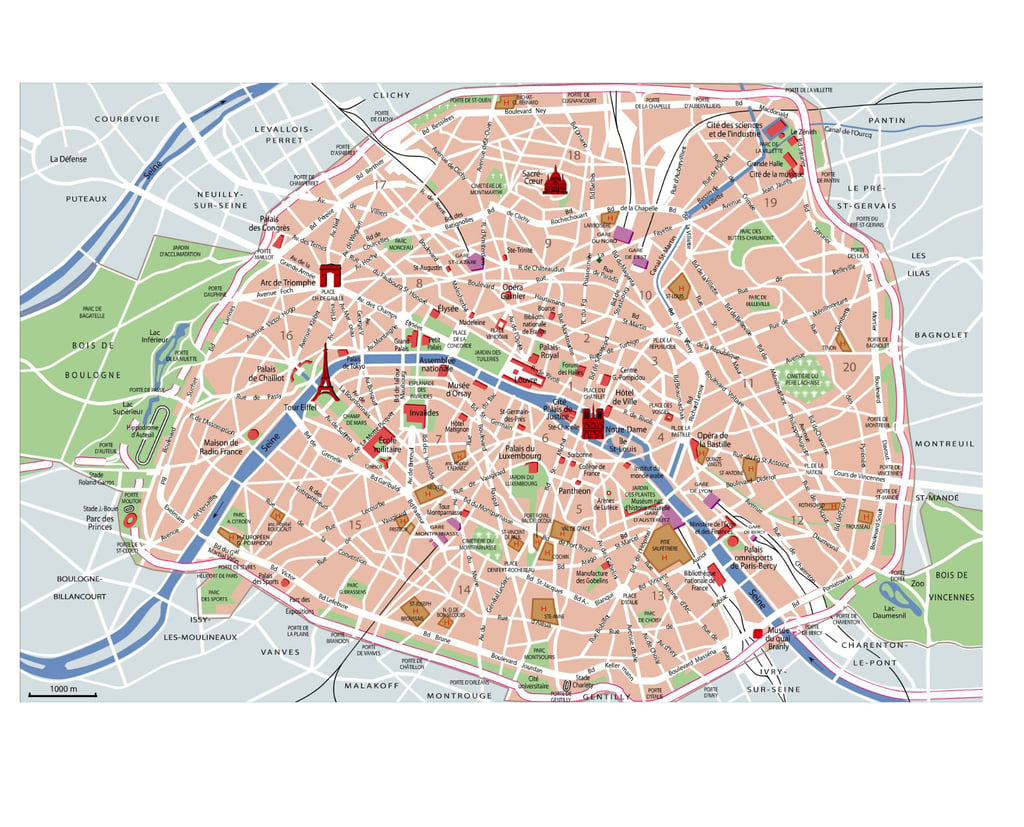
Go here for a free (print or download) of this map. There are also maps for the hop-on-hop-off open-top bus tours and for river cruises.
Getting around is easy when you mix walking and the Metro
You'll walk a lot in Paris because it's rewarding. Still, the Metro saves your feet and your schedule. The system has hundreds of stations (around 300), and you're usually within a short walk of one. It runs from early morning until after midnight, and a single ticket costs around $2 US.
From Charles de Gaulle Airport, the RER B is a fast, budget-friendly way into the city. Once you're moving, keep your bag in front of you in crowded stations and on packed trains, especially at busy transfer points
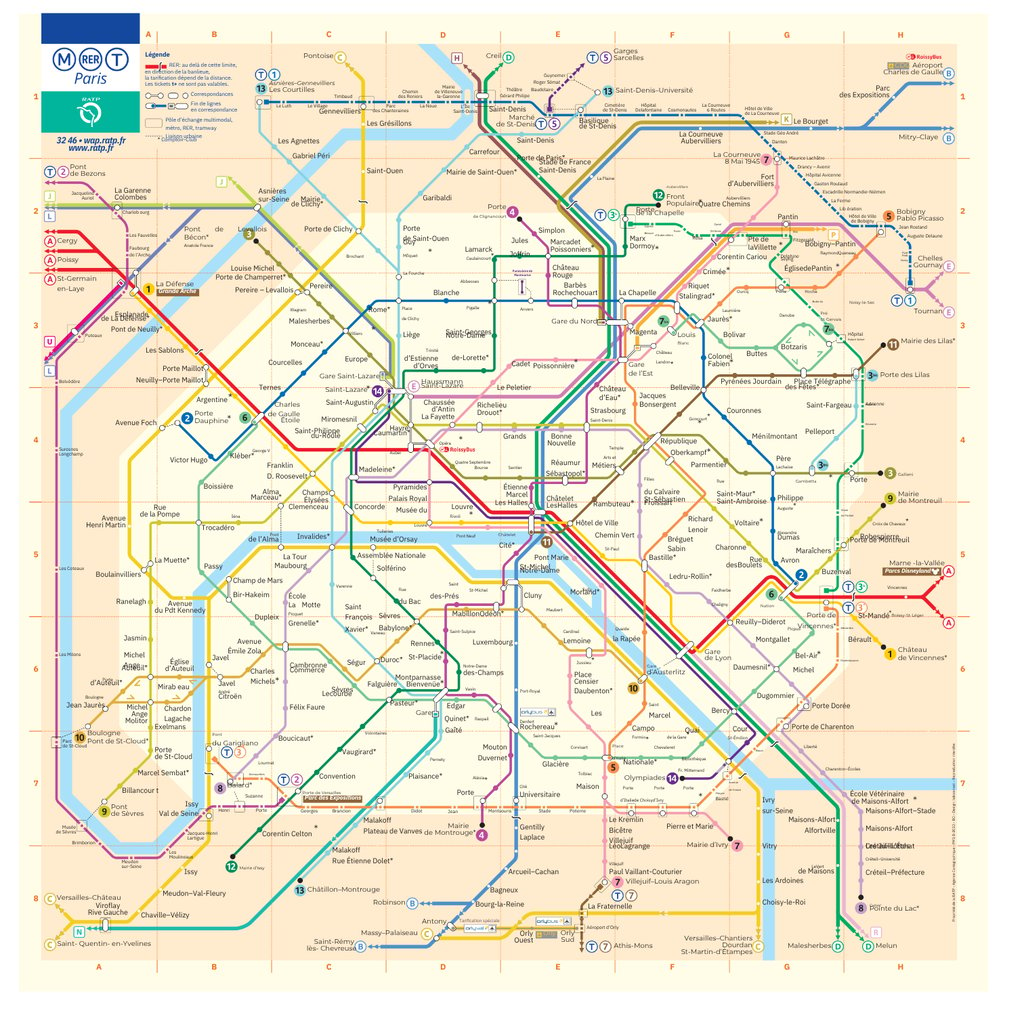
Click for a free copy of this map of the Paris Metro. (print or download)
Eat as you belong here: a simple food game plan by neighborhood.
Food planning doesn't need spreadsheets. Decide where you'll explore, then pick a café or bistro in that area. You'll eat better and waste less time.
Montmartre works well for café lunches, especially after a morning walk. For bakeries and snack stops, Rue des Martyrs is a classic route when you want options in a small stretch. When you order, start with a polite greeting (a simple hello goes a long way). Also decide if you want takeout or a sit-down meal, because the pace can be very different.
Balance one nicer dinner with easy wins like pastries, sandwiches, and market food. That mix keeps your budget steady and your mood happy.
Leave room for small surprises, walks by the Seine, and getting a little lost.
Some of your favorite memories won't be ticketed. A sunset river walk, a tiny bookshop, a quiet park bench, or a side street that makes you stop and stare can beat a packed schedule.
Exploring feels manageable because you're rarely far from a Metro stop. So go ahead and wander. Keep your phone in your pocket for a bit, then check directions when you need them.
Add a day trip if you have time, and keep it simple
A day trip makes sense if you have at least 3 to 5 nights. With a longer stay, it can feel like a breath of fresh air. Still, stick to a one-day trip, then keep the day before or after lighter so you don't feel like you're sprinting.
Popular options include Versailles, Champagne, Normandy, or Disneyland Paris. Regional trains make this doable, but your experience depends on getting the basics right.
How to pick the right day trip based on what you love
Match the trip to your interest, not the hype. Versailles is a good fit if you love history and palaces. Champagne works for wine and tastings. Normandy hits hard if you want coast views and WWII sites. Disneyland Paris is an easy yes if you want theme park fun.
Start early, then check return train times before you commit. That one step keeps dinner plans from turning stressful.

Guided Tours
Landing in a new city is exciting, but the planning can get messy fast. You see dozens of tours and unfamiliar local companies, and you have only a short window to choose wisely. Agents such as Viator help by bringing organized tours and excursions into one single booking platform.
You will be amazed at the number of tours/excursions that tour agents can offer (Viator offers over 1000 trips for Paris alone), so you will be able to find something to suit your needs.
Conclusion
Paris feels best when you keep it simple. Choose a season that fits you, stay in a neighborhood that matches your vibe, pre-book key tickets, and plan by neighborhoods with real breathing room. If you do that, the city opens up, and you stop watching the clock. Pick your top three must-dos, then build the rest around good food and long walks, because that's where Paris shines.
This post contains affiliate links. If you click through and make a purchase, I may earn a commission at no additional cost to you.
Contact
Connect
admin@citiesabroad.com
© 2025. All rights reserved.