
Amsterdam Holiday Guide: Best Time, Budget, and Easy Plans
Planning your first Amsterdam holiday can feel easy and confusing at the same time. This Amsterdam Holiday Guide helps cut through the confusion. The city looks small on a map, yet prices, seasons, and sightseeing choices can change your trip fast. The good news is that Amsterdam is compact, walkable, and friendly to first-time visitors. You don't need a packed schedule to enjoy it. You only need the right season, a budget that matches your style, and a simple plan for 3 or 5 days.
4/7/20268 min read
Key Takeaways
Pick shoulder season (April, May, or September) for the best mix of weather, crowds, and prices, or go mid-January to early March for the cheapest trip.
Set a realistic daily budget of €110-€170 for basics, €190-€320 mid-range, or €350+ for comfort; save by staying outside the canal ring, using the I amsterdam City Card, and limiting paid sights to one or two per day.
Follow a simple 3- or 5-day itinerary grouped by neighborhoods like Canal Ring, Jordaan, Museumplein, and De Pijp to explore without rushing.
Get around easily by walking, trams, bikes, or canal cruises; the city is compact, with free ferries and a quick airport train.
Book early (2-6 months ahead) for flights, hotels, and museums like Anne Frank House to avoid stress and higher costs.
Pick the best time for your Amsterdam holiday
Your best travel month depends on one thing, what matters most to you. If you want flowers and lively streets, spring works well. If you want lower prices, winter usually wins. If you want balance, shoulder season is hard to beat.
Amsterdam has a mild climate, but rain can show up in any month. That sounds annoying, yet it rarely ruins a trip if you pack a light waterproof jacket and good shoes. Most visitors spend a lot of time walking anyway, and taking a walking tour is an excellent way to see the city.
The cheapest time to visit, and when paying more is worth it
The cheapest time is usually mid-January through early March, after the holiday rush fades. Hotel rates often drop, and flights can be kinder to your wallet too. The trade-off is simple, days are shorter and the weather feels colder and wetter.
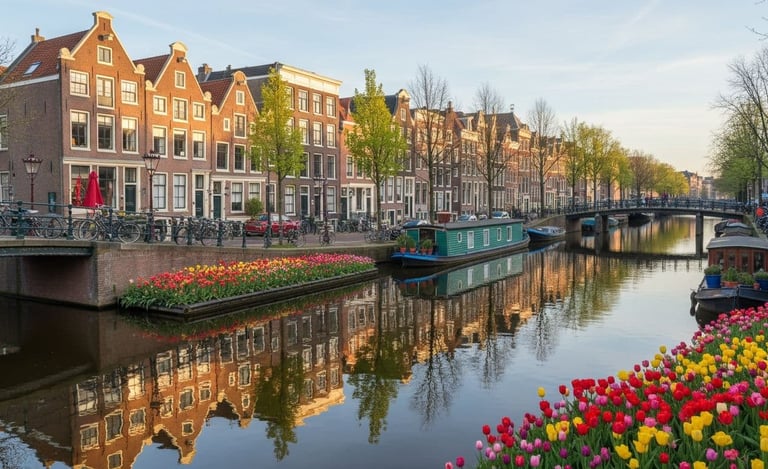
Shoulder season, especially late March, May, and September, gives you the best mix of decent prices and pleasant weather. For many first-time visitors, this is the sweet spot. You can still enjoy long walks, canal views, and museum days without the summer crush.
Peak season costs more for a reason. Spring tulip season, especially around April, looks fantastic. Summer also gives you long daylight and easy outdoor time. If you're paying extra for those months, you'll likely feel that value every evening when the city stays bright.
Book flights about 2 to 4 months ahead for shoulder season. For tulip season and summer, aim for 4 to 6 months ahead, especially if you want a well-located hotel. Museum tickets can sell out earlier than many first-timers expect, so lock in the Anne Frank House, Van Gogh Museum, and Rijksmuseum as soon as your dates are fixed.
Set a realistic budget before you book
Amsterdam can fit a lot of budgets, but it isn't a bargain city. The main cost jump usually comes from where you sleep, not what you eat. Stay inside the postcard-perfect canal belt, and your total rises fast.
As a rough guide for April 2026, a budget trip can land around €110 to €170 per day. A mid-range trip often sits near €190 to €320 per day. If you want a nicer hotel, more paid sights, and better dinners, expect €350+ per day.
What you may spend per day on hotels, food, transport, and tickets
A hostel bed often costs €35 to €70 a night, depending on season and location. A simple budget hotel usually starts around €110 to €180. Mid-range hotels often run €180 to €300, while stylish central boutique hotels can move well past that.
We strongly recommend using Trivago to find your ideal hotel. They filter your requirements on budget, location, facilities, ratings and dates. See their massive range for Amsterdam here.
Food is flexible. A bakery breakfast or quick lunch with stroopwafels may cost €6 to €12. Casual meals like bitterballen often land around €15 to €25. A nicer dinner with drinks can be €35 to €60+ per person. Coffee usually falls near €3.50 to €5.
Transport stays manageable if you don't overuse it. A local transit day can cost €9 to €18, depending on what ticket you buy. Bicycle rental often runs €12 to €20 a day. A Canal Cruise is usually €16 to €28. Big museum tickets often cost €20 to €27 each. A Schiphol Airport train transfer is usually under €6 to €7 one way to Amsterdam Centraal Station.
The big budget trap is hotel location. Rooms near the central canal area often cost much more than places a short tram ride away.
Easy ways to save money without making the trip feel cheap
You don't need to stay far out to save money. Areas just outside the canal ring often give you better hotel value and a calmer night's sleep. In many cases, you're still close enough to walk back after dinner.
Also, book your big museums early with the I amsterdam City Card. That helps you avoid expensive last-minute choices and sold-out time slots, plus it covers transport. Then build the rest of your day around free or low-cost pleasures, like canal walks, markets, courtyards, and park time.
Keep paid sights to one or two a day. That sounds simple, yet it works. Amsterdam is best in small pieces, not as a race from ticket to ticket. Walk when you can, use trams when your legs are done, and watch for city tax and weekend price jumps when you compare hotels.
Build an easy Amsterdam plan that fits your trip length
For a first trip, less is more. Amsterdam isn't a city where you need to cross huge distances all day. Most famous areas sit close enough that you can group them without much effort.
That makes planning easier. Instead of chasing every sight, build your days by neighborhood. You'll spend less time checking directions and more time noticing canal houses, bridges, markets, and cafés.
A simple 3-day Amsterdam itinerary for your first visit
Day 1, Canal Ring and Jordaan
Start near Central Station or Dam Square, then walk into the Canal Ring surrounded by historic canal houses. See the pretty bridges, De 9 Straatjes, and quiet side lanes. Later, spend time in Jordaan and, if booked early, visit Anne Frank House. For food, keep it easy with a café lunch and an Indonesian rijsttafel dinner nearby
Day 2, Museumplein and Vondelpark
Make this your culture day around Museumplein. Visit the Rijksmuseum or Van Gogh Museum, then slow down in Vondelpark. You don't need both big museums unless you love art and have the energy. Grab coffee and pastry in the morning, then go for a relaxed dinner around Oud-West or Leidseplein.
Day 3, Market, cruise, and a local neighborhood
Start at Albert Cuyp Market for stroopwafels and people-watching. Later, take a canal cruise, because it helps the city click in your head. Finish in De Pijp for dinner, or use the afternoon for a short half-day trip if you want a change of pace.
A relaxed 5-day Amsterdam itinerary with room for side trips
Day 1, old center and canals
Settle in with Central Station, Dam Square, and a first canal walk. Keep this day light so you can shake off travel stress.
Day 2, Jordaan and house museums
Focus on Jordaan, Anne Frank House, and quiet canal streets. Leave time to sit by the water instead of chasing one more stop.
Day 3, museum-heavy day
Spend your energy on Museumplein. Pair the Rijksmuseum with the Van Gogh Museum only if you book timed entries with a break in between. Add Vondelpark after lunch.
Day 4, easy day trip
Choose one simple outing. Haarlem is easy and charming. Zaanse Schans works if you want windmills. Utrecht gives you another canal city with a different feel. Pick one and keep the evening free back in Amsterdam.
Day 5, De Pijp, market life, and one last favorite
Walk through De Pijp, browse Albert Cuyp Market, snack on bitterballen at a local spot, and see the Heineken Experience if it appeals to you. Then revisit the canal area or take the free ferry to NDSM Wharf for a different side of the city.
A good first trip is not about seeing everything. It's about leaving with enough energy to enjoy what you do see.
How do I get around Amsterdam without getting lost?
Walk the compact center, use trams for longer hops to Museumplein, rent a bike, or take a canal cruise. Free ferries go to NDSM Wharf, and the Schiphol train is quick to Centraal. Check the GVB app for live routes.
How can I save money on my Amsterdam holiday?
Stay just outside the canal ring for better hotel value, book the Amsterdam City Card for museums and transport, and limit paid sights to one or two daily. Walk or take the tram instead of taxis, eat at markets for stroopwafels and bitterballen, and book early for shoulder season.
Use the city map and transport system without getting lost
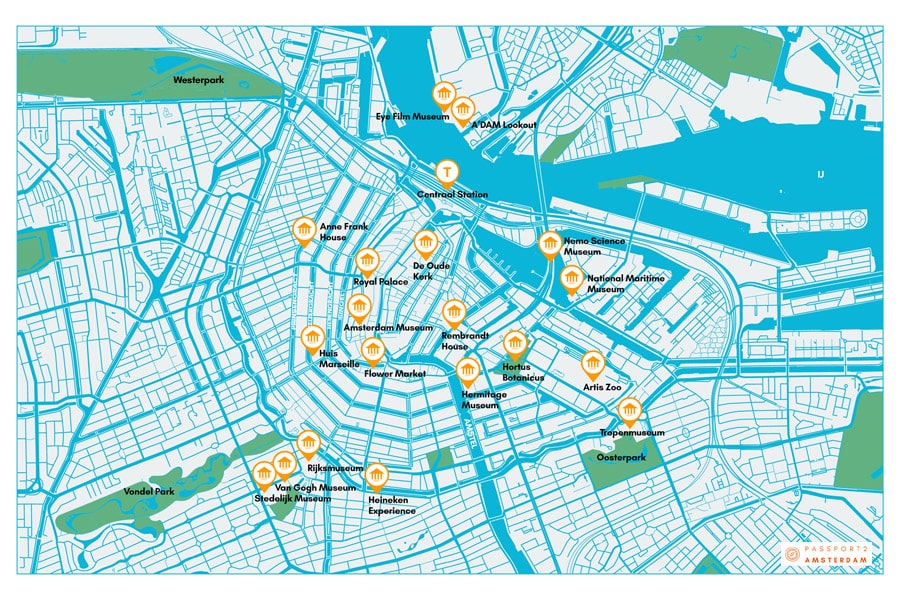
Amsterdam looks tricky before you arrive, but it makes sense fast. The center is small enough to explore on foot, and the main sights form a loose arc south and west of Central Station.
Once you picture that shape, the city feels much less confusing.
Amsterdam landmarks you should see first
Use these points to build your mental map:
Amsterdam Centraal Station sits at the top of the center and serves as your main arrival point.
Dam Square is a short walk south from Amsterdam Centraal Station, home to the Royal Palace with architecture reflecting the Dutch Golden Age.
The Canal Ring curves around the old center, including the Red Light District, and links many postcard views.
Anne Frank House stands west of the center, near Jordaan.
Jordaan is a charming area west of the main canals, great for strolling and cozy brown cafes as an alternative to modern bars.
Rijksmuseum and Van Gogh Museum sit south of the center in Museumplein.
Vondelpark is just west and southwest of the museum area.
De Pijp lies southeast of Museumplein.
Albert Cuyp Market runs through De Pijp.
Heineken Experience is between the center and De Pijp.
NDSM Wharf is north of the IJ river and is reached by ferry from behind Central Station.
If you imagine Amsterdam Centraal Station at the top, most first-trip sights spread below it. Jordaan sits to the west, museums to the south, and De Pijp a bit farther southeast.
How the Amsterdam metro, trams, ferries, and trains work for visitors
In central Amsterdam, you'll probably use trams more than the metro. Trams are handy for public transportation between Central Station, the canal area, Museumplein, and outer central neighborhoods, with little walking. For the center, consider a walking tour to take it all in.
The metro exists, but it helps more for outer districts than classic sightseeing in the old center. That's why many visitors barely use it on a short trip.
Free ferries leave from behind Central Station and cross the water to places like NDSM Wharf. They are simple, useful, and worth trying at least once. For the airport, the train from Schiphol Airport to Amsterdam Centraal Station is the easiest option for most travelers.
Because routes can change, check the live GVB map or app once you're in town. Think of it as your pocket map, not as something you need to study for hours before you go.
Conclusion
Your first Amsterdam holiday doesn't need perfect timing or a huge budget. It works best when you match the season to your style, keep your costs honest, and give yourself 3 to 5 days to move at a normal pace.
If you want balance, pick shoulder season. If you want lower prices, go in winter after the holidays. Then book your flight, hotel, and top museum tickets first.
After that, let the rest stay simple. Amsterdam gives you a lot back when you leave room for canals, neighborhoods, and long walks.
This post contains affiliate links. If you click through and make a purchase, I may earn a commission at no additional cost to you
Contact
Connect
admin@citiesabroad.com
© 2025. All rights reserved.